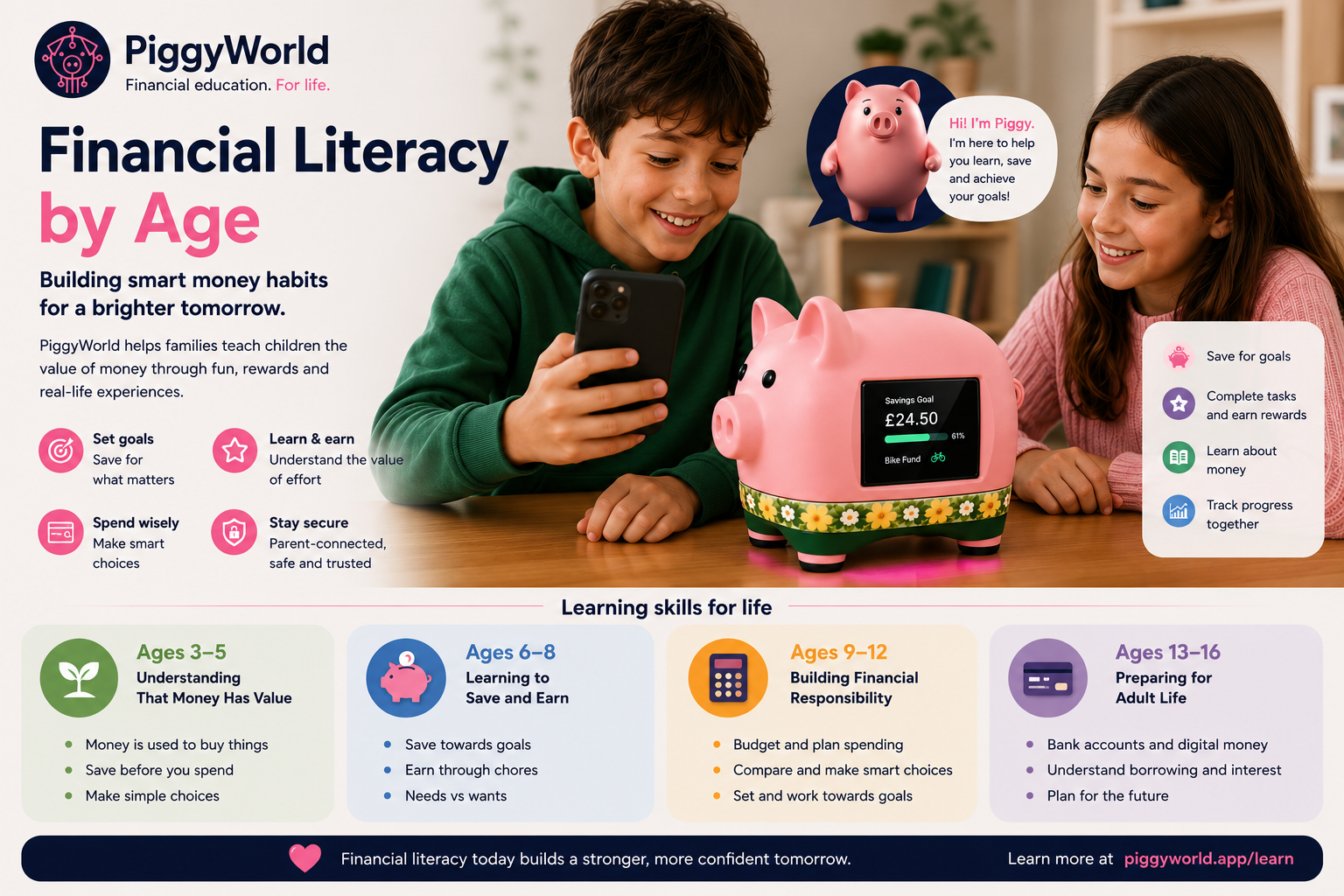
Financial literacy for children is the ability to understand, manage and make responsible decisions about money from an early age. It includes learning how to earn, save, spend, budget and set financial goals. Rather than being asingle lesson, financial literacy develops through everyday experiences, family conversations and practical habits that prepare children for adult life.
Money has become increasingly digital. Children now grow up seeing contactless payments, online shopping and banking apps long before they ever receive their first bank note. Because of this, learning how money works has never been more important.
Financial education is not about raising future accountants or investors. It is about helping children build confidence, responsibility and healthy habits that will guide them through out their lives. Small lessons learned during child hood often become lifelong behaviours.
Whether it issaving for a toy, completing household chores to earn pocket money or learning the difference between needs and wants, every experience helps children developa healthier relationship with money.
This guide explains what financial literacy really means, why it matters, what childrens hould learn at different ages and how parents can make money education a natural part of everyday family life.
Why IsFinancial Literacy Important?
Financial literacy is one of the most valuable life skills a child can develop. While reading, writing and mathematics are essential subjects at school, understanding how money works is equally important for everyday life.
Children begin forming money habits much earlier than many parents realise. Research suggeststhat many financial behaviours start developing during childhood through observation, repetition and everyday experiences at home. This means that even simple conversations about money can influence how children think about saving, spending and responsibility later in life.
Financial literacy is not about teaching children to become wealthy. Instead, it helps them develop confidence when making financial decisions, understand the valueof effort and recognise that money is a limited resource that should be used thoughtfully.
Children whol earn positive money habits often become adults who are better prepared to budget, avoid unnecessary debt, save for future goals and make informed financial decisions.
Perhaps even more importantly, financial education reduces anxiety around money. When children understand how money works, they are more likely to see finances as something they can manage rather than something to fear.
What Does Financial Literacy Include?
Financial literacy is much broader than simply saving money.
It is acollection of practical skills that children gradually develop as they grow.
Understanding the Value of Money
One of the first lessons children learn is that money has value because it represents time, effort and work.
Understanding this connection helps children appreciate why purchases require thought rather than impulse.
Earning Money
Children should understand that money is earned through effort.
Age-appropriate household responsibilities, small family jobs and entrepreneurial activities help children experience the relationship between work and reward.
Saving
Saving teaches patience and delayed gratification.
Instead of expecting instant rewards, children learn to work towards meaningful goals over time.
Whether saving for a toy, a game or a bicycle, reaching a goal provides a powerful sense of achievement.
Spending Wisely
Financial literacy also means making informed spending decisions.
Children should learn to compare options, consider quality, think about long-term value and distinguish between needs and wants.
These simple decisions become the foundation for responsible financial behaviour later inlife.
Budgeting
Budgeting introduces planning.
Children learn that money is limited and that choosing one purchase of ten means giving up another.
This concept encourages thoughtful decision-making instead of impulsive spending.
Setting Financial Goals
Goals makesaving meaningful.
Instead of saving simply because adults tell them to, children become motivated when they have something specific they want to achieve.
Breaking larger goals into smaller milestones teaches perseverance and planning.
Giving
Financial literacy is also about generosity.
Many families choose to teach children that money can be used not only for them selves but also to help others.
Donating a small percentage of savings or supporting a charity introduces empathy a long side financial responsibility.
Making Decisions
Every financial decision involves choices.
Should I spend now or save for later?
Should I buy something cheap today or wait for something better?
Helping children think through these questions develops critical thinking skills that extend far beyond money.
Why Should Children Learn About Money Early?
Children begin observing financial behaviour long before they fully understand money it self.
They notice parents paying with cards, ordering online, receiving deliveries and discussing house hold expenses.
Without guidance, many children simply assume that money appears automatically whenever adults need it.
Early financial education helps replace these assumptions with understanding.
Young children quickly grasp simple concepts such as saving, waiting and making choices whenthese ideas are introduced through everyday experiences.
Learning gradually also prevents money from becoming a mysterious or stressful topiclater in life.
Parents do not need formal lessons.
The most effective financial education often happens naturally through conversations during shopping trips, family budgeting discussions, saving for birthdays or planning holidays together.
These real-life experiences help children understand that money is part of everyday life rather than a subject reserved only for adults.
Financial Literacy by Age
Financial literacy is not something children learn overnight. Like reading or riding a bicycle, it develops gradually through age-appropriate experiences. Every stage of child hood presents new opportunities to introduce money concepts in a simpleand engaging way.
Rather than focusing on complex financial topics, parents should aim to build confidence step by step.
Ages 3–5:Understanding That Money Has Value
At this age, children are naturally curious and begin noticing money in every day life. They see adults shopping, paying with cards and receiving deliveries, but they rarely understand where money comes from.
The goal is not to teach numbers or budgeting, but to introduce simple ideas such as:
- Money is used to buy things.
- We cannot buy everything we want.
- Sometimes we save before we buy.
- We make choices about how we spend money.
Simple activities such as using toy coins, role-playing shops or saving loose changein a piggy bank help children understand these early concepts.
Ages 6–8:Learning to Save and Earn
Primary school children are ready to connect effort with rewards.
This is often the ideal age to introduce:
- Saving towards a goal.
- Small household responsibilities.
- Pocket money.
- The difference between needs and wants.
Instead of giving children everything immediately, parents can encourage them to save to wards something they genuinely want.
Watching their savings grow helps develop patience and self-control.
Ages 9–12:Building Financial Responsibility
As children grow older, they become capable of making more independent decisions.
This is theperfect time to introduce:
- Budgeting.
- Comparingprices.
- Planning purchases.
- Setting longer-term saving goals.
- Understanding online payments.
Children can begin managing a small budget for hobbies, gifts or personal spending while still receiving guidance from parents.
Learning from small mistakes at this age is far less costly than making large financial mistakes later in adult hood.
Ages 13–16:Preparing for Adult Life
Teenagers are increasingly exposed to digital payments, online shopping, social media advertising and peer pressure.
Financial education should now include:
- Bank accounts.
- Debit cards.
- Digital payments.
- Online scams.
- Interest.
- Borrowing.
- Responsible spending.
Many teenagers also begin earning money through part-time jobs or seasonal work, giving them valuable real-world experience managing income for the first time.
Parents should encourage teenagers to create budgets, save for larger purchases and think carefully before making impulse purchases.
Common Financial Literacy Skills Every Child Should Learn
Although every family is different, there are several money skills that almost every child will benefit from developing before adult hood.
Understanding Needs vs Wants
One of the most important financial lessons is recognising the difference between things we need and things we simply want.
Children quickly learn that food, clothing and housing are essential, while many purchases are optional.
Understanding this distinction helps reduce impulsive spending and encourages thought ful decision-making.
Delayed Gratification
Modern life encourages instant rewards.
Financial literacy teaches children that waiting often leads to better outcomes.
Whether saving for a bicycle instead of buying small toys every week or working towards along-term goal, delayed gratification strengthens patience, discipline and resilience.
These skill sextend far beyond money and positively influence education, health and future career success.
Goal Setting
Saving becomes much more meaningful when children have a clear objective.
Instead of saying "save your money", parents can encourage children to choose something specific they want to achieve.
Breaking larger goals into smaller milestones helps children stay motivated while learning that consistent effort produces results.
Decision Making
Every purchase involves a decision.
Should I buythis today?
Should I wait?
Is there a better option?
Helping children think through these questions develops critical thinking skills that will support them throughout adul thood.
Good financial decisions rarely happen by accident—they are built through practice.
Confidence Around Money
Perhaps the greatest benefit of financial literacy is confidence.
Children who regularly talk about money with their parents are often more comfortable asking questions, making decisions and managing financial challenges as they growolder.
Money becomes anormal part of life rather than a source of confusion or anxiety.