Going back to school usually means new shoes, a new bag, fresh stationery and a return to early mornings. But the start of a new school year can be something more valuable: a chance to reset the habits children carry with them every day.
For parents, September offers a natural moment to introduce simple routines around homework, reading, helping at home, earning, saving and making choices. The aim is not to fill every minute with tasks or to pay children for everything they do. It is to help them gradually understand a bigger idea: what I do has consequences, small actions add up, and progress takes time.
That lesson connects school life with financial education surprisingly well.
A child who learns to prepare their school bag without being reminded is practising responsibility. A child who reads regularly is learning consistency. A child who completes an agreed extra job to earn pocket money begins to understand the relationship between work and reward. And a child who chooses to save that money instead of spending it immediately is practising patience and decision-making.
Back to school, in other words, can become a practical lesson in life skills.
What is the best way to prepare a child for the new school year?
The best preparation is usually a small, predictable routine that the child can understand and gradually take ownership of. Start with a few behaviours — such as getting their bag ready, reading, completing schoolwork and preparing for bedtime — rather than trying to change everything at once.
Children do not become independent simply because adults tell them to “be more responsible”. Independence is built through repeated opportunities to plan, act, see the result and try again.
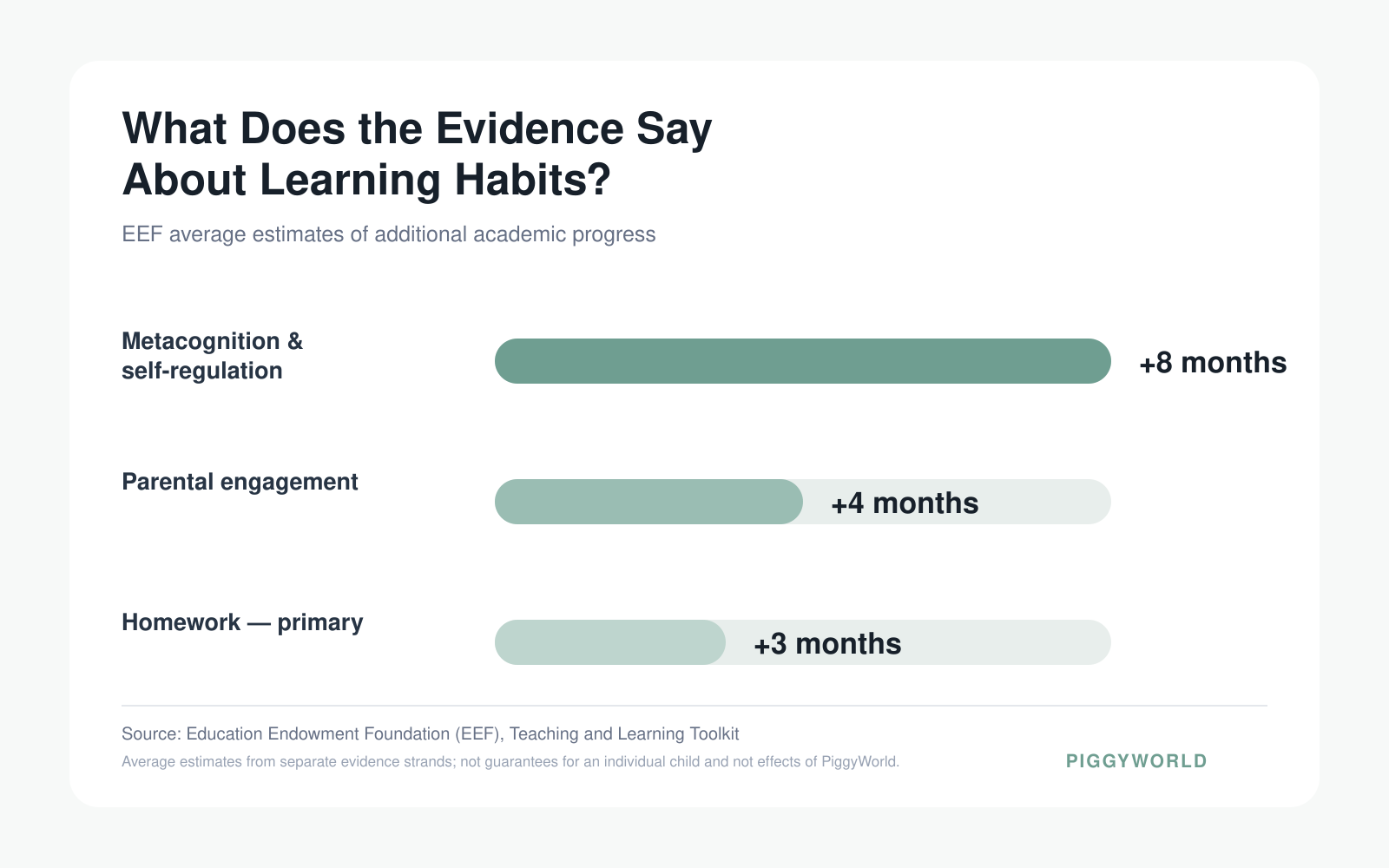
This fits closely with evidence on self-regulated learning. The Education Endowment Foundation (EEF) highlights strategies such as setting goals, monitoring progress and reflecting on what could be improved. These ideas are normally discussed in an educational setting, but the basic principle is just as useful at home.
Instead of:
“You need to be more organised this year.”
try making the behaviour visible:
- Put tomorrow's books in the school bag.
- Read for 20 minutes.
- Put the uniform or clothes out for the morning.
- Complete the agreed homework task.
- Check the week's goal before bed on Sunday.
For younger children, three clear routines may be far more useful than a list of fifteen. Once those behaviours become normal, another can be added.
Why is back to school a good time to build new habits?
A new school year already changes a child's daily routine, so it provides a natural moment to introduce a small number of new habits at the same time. The most useful habits are specific, achievable and repeated consistently rather than introduced as a long list of rules.
The beginning of term comes with natural markers: a new classroom, new teacher, new timetable and perhaps new responsibilities. Parents can use that sense of a fresh start without turning September into a pressure campaign.
A useful rule is to focus on systems, not promises.
“I will be good at school this year” is vague.
“I will pack my bag before I go to bed” is a behaviour.
“I will read every day” is still broad.
“I will read for 15 minutes after dinner on school nights” is a routine.
The clearer the action, the easier it is for a child to know when they have succeeded.
How can I get my child into a good school routine without constant arguments?
Make the routine short, visible and predictable. Agree what needs to happen, put it in the same order each day and let the child complete as much of it independently as their age allows. Praise follow-through and progress rather than demanding perfection.
Many arguments happen because the adult is carrying the whole system in their head: “Have you done your homework? Where are your shoes? Pack your bag. Brush your teeth. Have you read?” The child experiences a stream of instructions rather than a routine they own.
Try dividing the day into simple checkpoints.
After school
Snack and decompress, then deal with anything time-sensitive. For some children that may mean homework straight away; others work better after a proper break.
Early evening
Reading, an agreed household responsibility, checking tomorrow's timetable or completing a small learning task can happen here.
Before bed
Pack the school bag, prepare clothes and check that anything needed for the morning is ready.
The goal is eventually for the parent to ask, “Have you done your evening routine?” rather than issuing five separate instructions.
How do I motivate my child to do homework?
Start by making the task manageable and its purpose clear. A consistent time and place, a defined finish point and positive feedback can be more useful than simply offering a bigger reward. Rewards may support a routine, but they should not become the only reason a child learns.
The EEF's review of homework evidence reports a positive average impact, while also noting an important point for parents: the quality of the task appears to matter more than the quantity. Homework linked to classroom learning and accompanied by useful feedback tends to be more effective.
That should reassure parents who feel that a productive evening must mean a very long evening.
A practical home system might be:
- Know what the task is.
- Remove avoidable distractions.
- Work for the appropriate period for the child's age and the task set by school.
- Mark it as completed.
- Move on.
If homework is regularly causing distress, taking far longer than expected or creating serious conflict, a reward system is not necessarily the answer. Speak to the child's teacher and understand what is making the task difficult.
Should I reward my child for doing homework?
You can recognise consistency and effort without paying a child for every piece of homework. For many families, praise, stars, progress towards a privilege or a shared activity are better tools for building the routine. Money can be reserved for situations where the parent genuinely wants to teach earning.
This distinction matters.
If every normal responsibility has a cash price attached, children may begin to ask, “What do I get for doing it?” before deciding whether to participate. But that does not mean rewards are inherently bad.
Rewards can make progress visible. A child might collect stars for completing their agreed evening routine for four school nights, then choose a family activity at the weekend. Another might work towards staying up a little later on Friday or choosing the film for family night.
The reward acknowledges consistency. It does not have to turn learning into a transaction.
Is it good to reward children for reading?
A small reward system can help establish a reading routine, especially when a child is reluctant to begin, but the long-term goal should be for reading to become rewarding in itself. Reward consistency or effort rather than the number of pages raced through.
For example, “read for 15 minutes” is often a better target than “read 20 pages” because children read at different speeds and books vary enormously.
You can also make the reward part of the reading experience:
- choose the next book together;
- visit the library;
- let the child choose the bedtime story;
- earn a star towards a weekend privilege;
- talk about the favourite part of the story.
The EEF notes that metacognitive and self-regulation approaches have shown positive effects across subjects, including reading. The broader lesson for home is useful: help children notice their own progress rather than making the adult the permanent controller of it.
Should children earn pocket money for chores?
There is no single rule that suits every family. Paying for selected chores can teach that money is earned through effort, while keeping basic family responsibilities unpaid can teach that everyone contributes at home. Many families can use both approaches at the same time.
This is one of the most common questions parents ask, and the answer does not have to be all or nothing.
MoneyHelper, provided by the Money and Pensions Service, explicitly recognises both approaches. It notes that paying for chores can help children learn that people generally work for money, while some parents may prefer chores to teach that children should contribute simply because they are part of the household.
A useful family model is to separate responsibilities from extra jobs.
Everyday family responsibilities
These might include putting toys away, putting dirty clothes in the laundry basket, taking a plate to the kitchen, keeping a bedroom reasonably tidy or helping prepare their own school things. They are not necessarily paid.
Optional or additional jobs
These might include washing the car with a parent, helping sort a cupboard, doing an extra garden job or completing another age-appropriate task beyond the child's normal responsibilities. A parent may decide that these can earn money.
That creates a much clearer lesson: we help because we belong to a family, and there are also opportunities to earn through additional effort.
Every household can draw the line differently.
What chores are suitable for children by age?
Choose chores according to the individual child's development, safety and abilities rather than treating age as a strict rule. A useful chore is one a child can understand, practise and increasingly complete with less adult help.
For younger primary-age children, examples might include putting toys away, matching socks, setting out non-breakable items for dinner, feeding a pet with supervision or preparing their school bag using a checklist.
As children become more capable, responsibilities could expand to unloading safe items from the dishwasher, helping with laundry, making a simple snack, tidying shared spaces or helping with age-appropriate cleaning.
Older children may take responsibility for more complex household jobs, planning what they need for school, preparing simple meals or managing a small agreed budget.
The progression matters more than the precise list. A six-year-old who remembers to put their reading book back in their bag is practising the same underlying skill — responsibility — that they will later use to manage deadlines, belongings and money.
How can chores teach children about money?
Chores can create a real-life earning experience: agree the job and reward in advance, let the child complete it, then let them decide what to do with the money. The most important financial lesson happens after earning — when the child must choose between spending now and saving for later.
Imagine a child wants something costing £20.
They have £7 saved. They complete an agreed extra job and earn £2. Later that week they receive their regular pocket money. Suddenly addition, work, patience and delayed gratification are not abstract lessons. They are connected to something the child cares about.
Parents can then ask questions instead of giving lectures:
- How much do you have now?
- How much more do you need?
- If you spend £3 today, what happens to your goal?
- Is the thing you want today more important than the thing you are saving for?
- How could you reach your goal sooner?
That conversation is financial education.
If you want to explore this further, read How Much Pocket Money Should You Give Your Child? and Why Kids Should Earn Money.
How can I teach my child to save money during the school year?
Give saving a visible purpose. Let the child choose an achievable goal, show how much it costs, track progress and give them repeated opportunities to decide whether to save or spend. A goal turns “saving” from an instruction into a choice with a reason behind it.
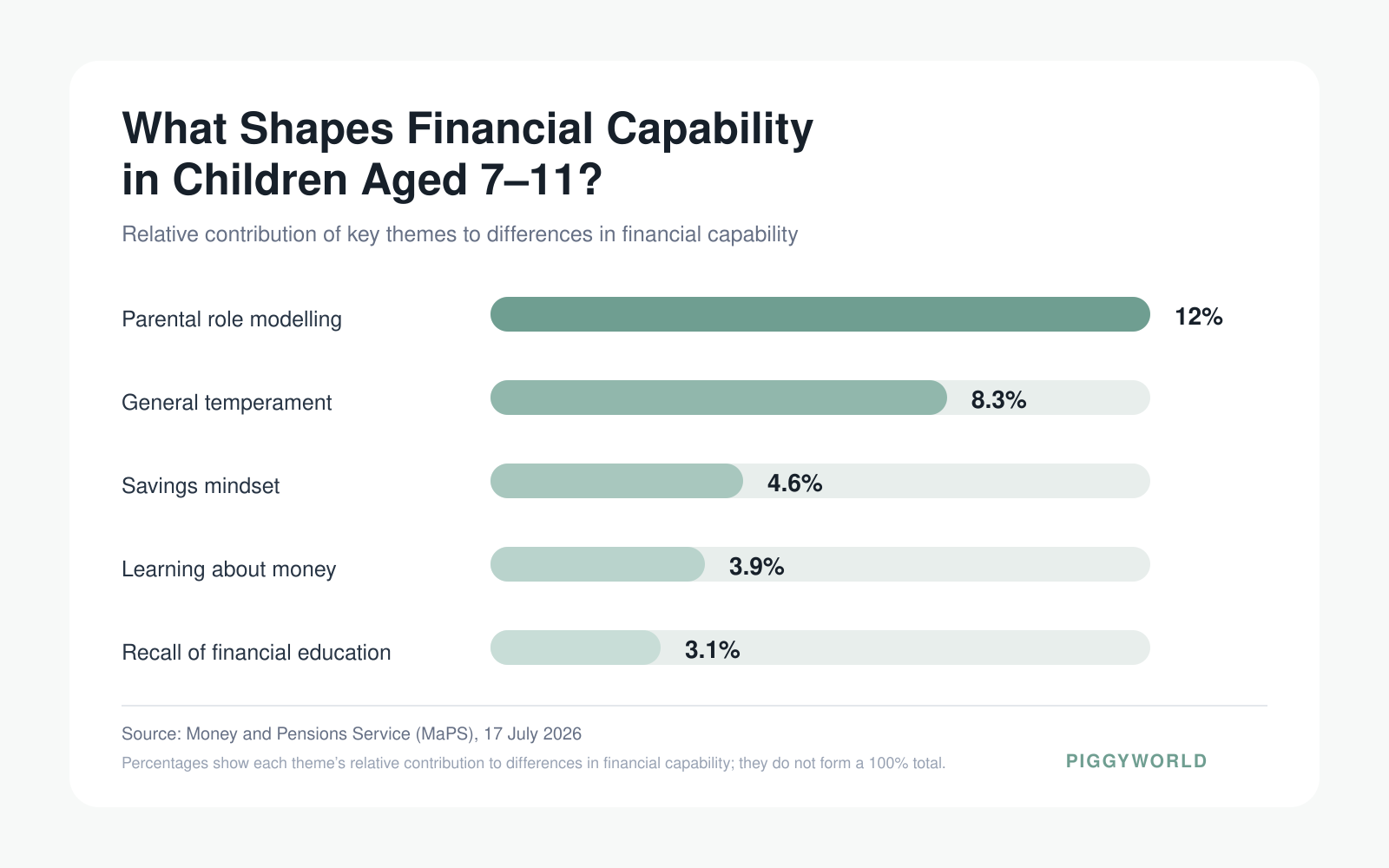
MoneyHelper says that giving children money regularly can help them learn to save and budget, and its age guidance suggests that children aged seven to eight can increasingly save for things and make choices about their own spending.
That does not mean every child needs the same allowance or must start at the same age. The amount can be small. What matters educationally is that there is enough consistency for decisions to have consequences.
If a child spends everything on Monday, avoid automatically replacing it on Tuesday. If they save, let them experience the satisfaction of getting closer to their chosen goal. Both outcomes teach something.
For more ideas, see How to Teach Kids About Money.
How can I teach my child the difference between earning, saving and spending?
Make each concept an action rather than a definition. Let the child earn money through an agreed opportunity, save some towards a goal and make a real spending decision with another part. Then talk about what changed after each choice.
Children live in an increasingly digital economy. They may see an adult tap a card, use a phone or order something online without ever seeing coins change hands. That convenience can make the movement of money harder to observe.
The answer is not necessarily to choose between cash and digital money. It is to make the invisible visible.
A child can count physical coins and also see a digital balance change. They can put money towards a physical savings goal and later learn how money moves through an account. Different tools can teach different parts of the same lesson.
We explore that question in more depth in Cash vs Digital Money for Children: Which Helps Them Learn Better?.
What money skills should children learn at primary-school age?
Useful early money skills include recognising that money is limited, understanding wants and needs, making simple spending choices, saving towards a goal, learning that earning requires effort and beginning to understand digital as well as physical money.
Money Helper's age-based guidance suggests explaining money, wants versus needs and saving to children around five to six, while seven- to eight-year-olds can begin making more independent saving and spending choices. By nine to eleven, children can take greater responsibility and begin learning about areas such as budgeting.
Financial education is also becoming a more explicit part of the national conversation in England. In November 2025, the Department for Education announced plans to make citizenship compulsory in primary education, including financial literacy. The Government says the revised national curriculum is planned for first teaching from September 2028.
That is an important distinction: in the 2026/27 school year, this reform is planned rather than fully implemented. Parents do not, however, need to wait until 2028 to make money part of everyday family life.
How can I make learning about money fun?
Use real decisions, short challenges and visible goals. Children can compare prices in a shop, plan a small budget, earn towards something they want, track savings or choose between spending now and waiting. Money becomes easier to understand when it is connected to action.
You do not need to announce a “financial literacy lesson”. Try ordinary moments:
- At the supermarket, compare two prices.
- Give a small budget for choosing a snack.
- Ask whether an item is a want or a need.
- Let the child count the remaining money after a purchase.
- Set a savings goal for something meaningful.
- Talk about why paying by card or phone still means money has left an account.
Playfulness helps, but the decision needs to remain real enough to have meaning. A pretend shop can teach a young child how exchange works; managing £5 of real pocket money can later teach what it feels like when £5 is gone.
Are reward charts good for children?
Reward charts can be useful for making a new behaviour visible and helping younger children see progress, but they work best when the goal is clear and achievable. They should support the development of a habit rather than become a permanent price list for normal behaviour.
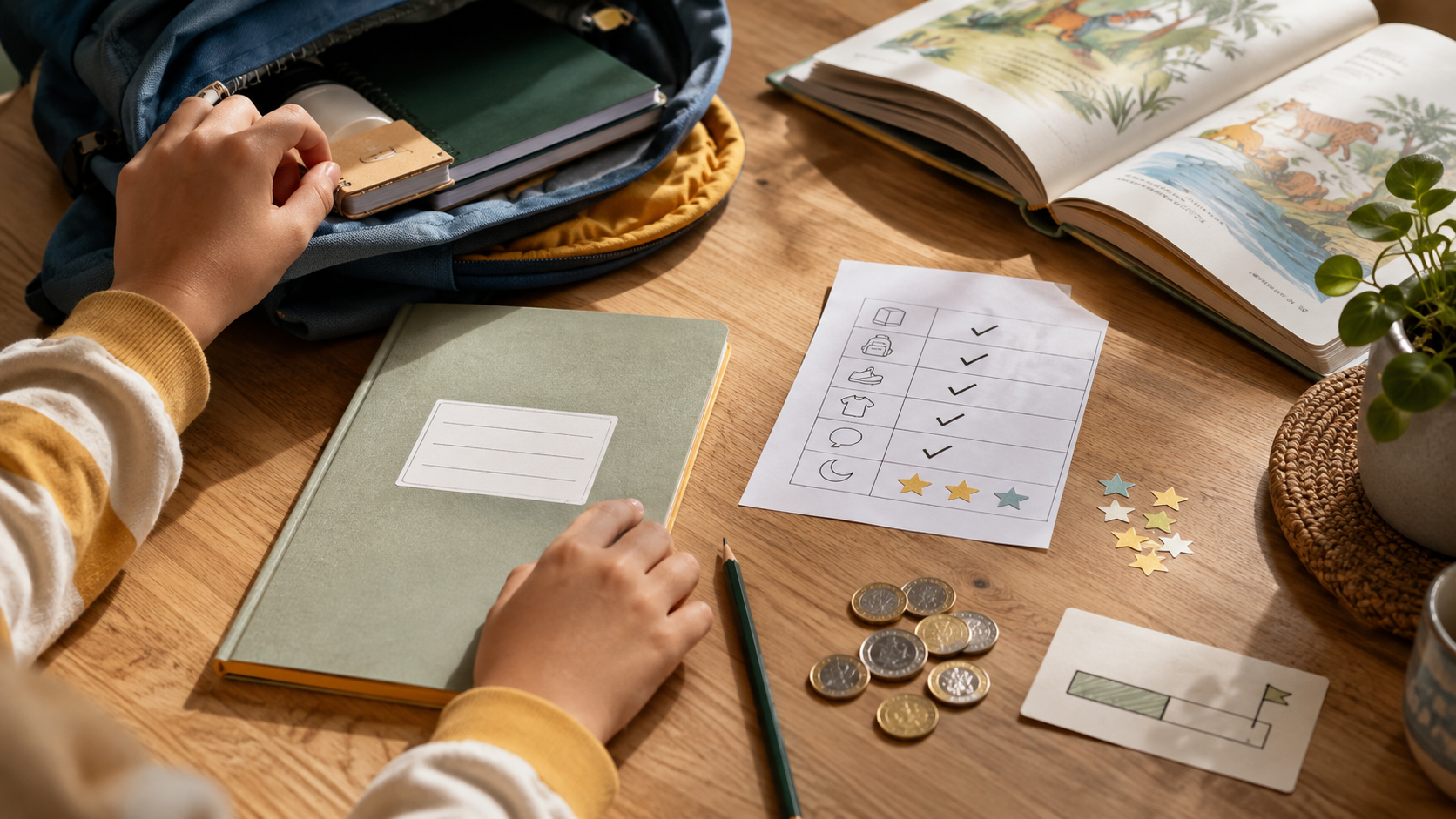
A simple system might track only three things during the first weeks of school:
- school bag ready;
- agreed reading completed;
- evening routine completed.
The child sees progress. The parent recognises consistency. After the behaviour becomes established, the chart can change, become less frequent or disappear.
The important question is not “How many rewards can we give?” It is “What skill are we trying to help this child practise?”
What rewards can I give my child that are not money, sweets or screen time?
Good rewards can be experiences, choices, privileges or recognition. The best reward is something the individual child genuinely values and that the family can deliver consistently.
Ideas include choosing the family film, choosing Friday dinner, an extra bedtime story, a trip to the park, baking together, choosing a weekend activity, one-to-one time with a parent, picking the music in the car or earning progress towards a larger shared experience.
This is especially useful for school-related habits. You can reserve money for teaching earning and use non-financial rewards for behaviours where you want the motivation to remain broader.
How can I help my child become more independent this school year?
Give them real responsibilities in small steps. Show them how to do a task, let them practise it, reduce reminders gradually and allow safe, manageable consequences. Independence grows when children are allowed to own part of the process.
For example, a parent may initially pack a school bag with the child while using a checklist. Next, the child uses the checklist while the parent watches. Later, the child packs it alone and the parent asks only whether it has been done.
The same progression works with money.
At first, a parent may explain every choice. Later, the child chooses whether to spend £2 or add it to a savings goal. Eventually, they begin planning ahead.
This is why routines, responsibilities and money education belong in the same conversation. All three involve gradually transferring appropriate decision-making from adult to child.
A simple back-to-school system parents can actually use
You do not need an elaborate family economy. Start small.
Step 1: Choose three habits
Pick three behaviours that would genuinely make the school week better. For example: pack the school bag, read for 15 minutes and complete one agreed household responsibility.
Step 2: Decide what is simply expected
Make clear which behaviours are normal responsibilities and are not paid. Children need to know that being part of a family involves contributing.
Step 3: Create optional earning opportunities
If you use pocket money for chores, identify selected extra jobs and agree the reward before the task is done.
Step 4: Make progress visible
Use ticks, stars, a calendar, a progress bar or another simple visual system. Children should be able to see what they have completed without waiting for a parent to tell them.
Step 5: Add a savings goal
Let the child choose something worth waiting for. Write down the target and track progress towards it.
Step 6: Talk about the choices
Ask what they want to do with money they receive. Avoid making every decision for them. A small, safe mistake with pocket money can be a useful lesson.
Step 7: Review, don't constantly reset
At the end of the week, ask: What worked? What was difficult? What should we change next week?
That simple loop — plan, do, track, reflect — echoes the self-regulation strategies highlighted by the EEF and gives children an active role in their own progress.
What is a good educational back-to-school gift for a child?
A good educational gift is one a child wants to use and that creates repeated opportunities to practise a useful skill. Depending on the child, that could be books, a creative kit, a practical learning tool or a product that turns goals, responsibilities and money into an interactive experience.
The best educational gifts do not feel like extra homework.
Before buying, ask:
- Will the child use it more than once?
- Does it encourage action rather than passive consumption?
- Can the skill grow with the child?
- Can a parent participate without taking over?
- Does it connect learning to everyday life?
For financial education, that last question is particularly important. Money is a life skill, so the strongest lessons often happen when children actually earn, save, decide and see progress.
Looking for a back-to-school gift that teaches more than it entertains?
This is exactly the problem PiggyWorld was created to explore.
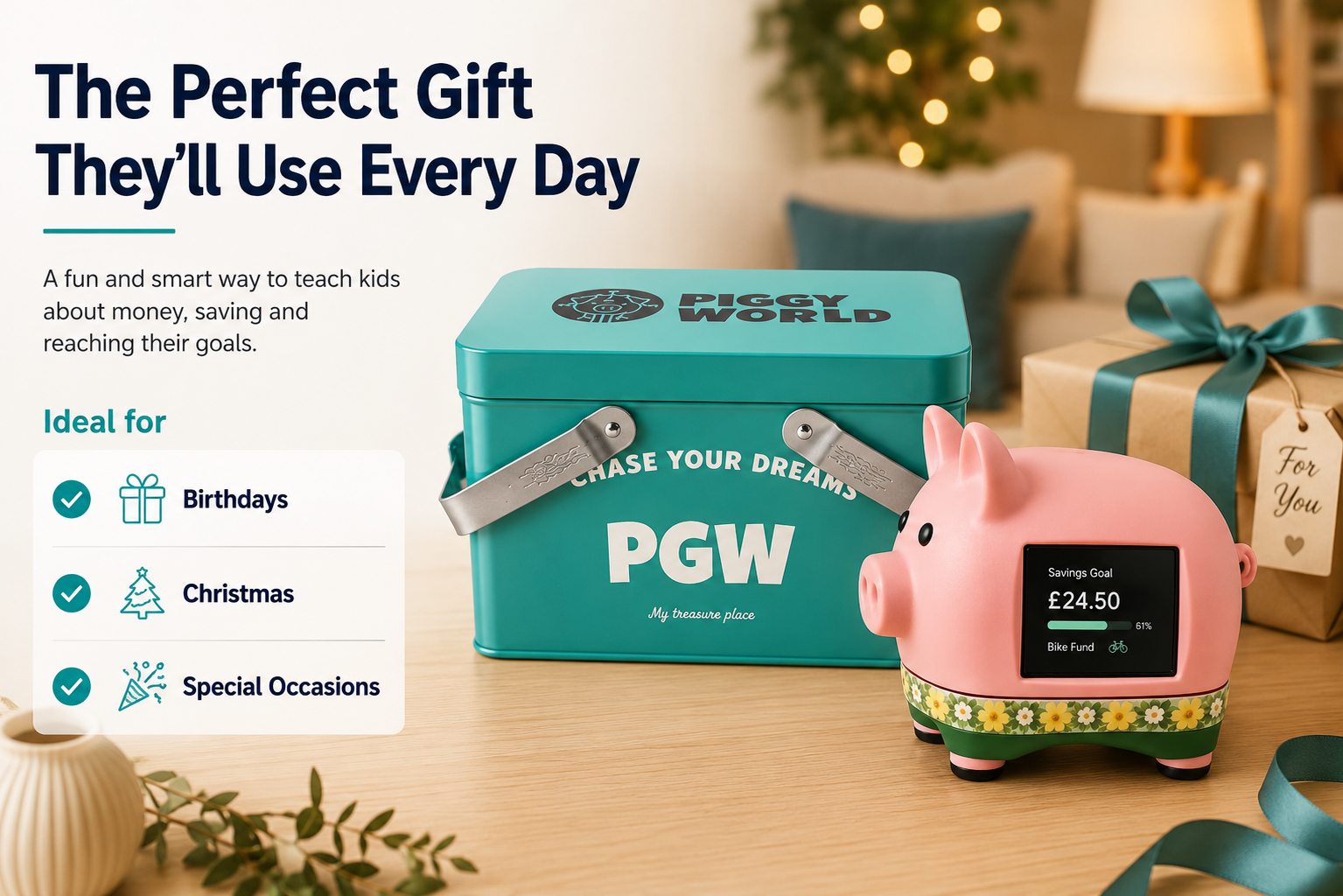
PiggyWorld is a smart piggy bank and financial education platform for children that combines a physical saving experience with a parent-controlled app, goals, tasks, rewards and real-world money learning.
Instead of separating “chores”, “rewards” and “learning about money” into unrelated activities, families can connect them as one journey:
Do → achieve → earn → decide → save → progress.
A parent might create a reading goal, an agreed responsibility or an extra paid task. The child can see progress, receive recognition or rewards and work towards something they want. Money stops being just a number adults talk about and becomes part of a visible learning experience.
Importantly, PiggyWorld is not designed to tell families that every task should be paid. Parents remain in control of what they create, what carries a reward and what kind of reward is appropriate.
PiggyWorld's commercial launch is planned for 15 October 2026, so it will arrive after the first September rush. But building good habits should not end after the first few weeks of term. The real challenge is keeping them going through the school year.
That is where the idea becomes bigger than a back-to-school purchase.
Not a toy. A life skill.
Frequently asked questions about back-to-school habits, rewards and money
Should I pay my child for good grades?
There is no need to attach money to grades in order to recognise achievement. Consider rewarding effort, consistency and good learning habits rather than only the final mark, especially where the child cannot fully control the outcome. If your family chooses a financial reward, make sure the conversation still focuses on learning and progress.
Should I pay my child for reading every day?
You do not need to pay for daily reading. A star, praise, choosing the next book or progress towards a non-monetary privilege may be enough to establish the habit. If money is used, avoid making it the only reason to read.
Should children get pocket money every week?
For younger children, a weekly rhythm can make waiting and budgeting easier to understand. MoneyHelper says regular pocket money helps children practise saving and budgeting, but the amount and frequency should suit the child's age, the responsibility you want them to have and your family budget.
What age should a child start learning about money?
Money learning can begin in the early years through simple ideas such as exchanging money for goods and recognising choices. MoneyHelper recommends building understanding progressively: by around five to six, parents can discuss how money works, wants and needs, and why people save.
How do I teach my child to save instead of spending everything?
Give saving a goal the child actually wants, track progress visibly and let spending have natural consequences. If all spent money is immediately replaced, the child has little reason to plan. Start with small amounts so mistakes are safe.
Is cash or digital money better for children?
Both can teach useful skills. Cash makes quantity and exchange tangible; digital tools can help children understand the world in which much adult money is now managed. The key is to make balances, transactions and consequences visible rather than allowing money to feel unlimited or invisible.
How many habits should we introduce at the start of term?
There is no universal number, but starting with two or three clear behaviours is usually more manageable than trying to transform the whole routine at once. Add or change habits when the first system is working.
What if a reward chart stops working?
First ask whether the target is clear, realistic and still meaningful to the child. A reward system is a tool, not the goal. If the behaviour has become habitual, you may no longer need the chart. If the task remains unusually difficult, look for the underlying reason rather than simply increasing the reward.
The most valuable thing children can take back to school
New stationery gets used. Shoes get outgrown. Bags eventually need replacing.
But a child who starts to understand responsibility, consistency, earning, patience, saving and choice is building something that can last far beyond one school year.
Back to School 2026 does not need to mean creating a perfect routine on day one. Pick one or two things that matter. Make them clear. Let your child see their progress. Give them appropriate choices. Talk about money in ordinary life. And remember that the eventual goal is not a child who follows a reward chart perfectly.
It is a child who increasingly understands why their choices matter.
That is a lesson worth carrying into every school year.
Sources
- Education Endowment Foundation — Metacognition and self-regulation
- Education Endowment Foundation — Homework
- Education Endowment Foundation — Parental engagement
- MoneyHelper — Pocket money and saving
- MoneyHelper — Learning about money by age
- Department for Education — New curriculum to give young people the skills for life and work